Charting the Alpha Territory

This is simply a list of links to cumulative blog outputs from the ESRC funded Alpha Territory that I have written to date and others with colleagues (Roger Burrows, Hang Kei Ho, Simon Parker, David Rhodes) project by myself and in conjunction with colleagues. I will add to this as future outputs emerge.


The spatial consequences of Piketty’s understanding of Capital: A response to Piketty & Savage, Theory, Culture and Society blog

http://theoryculturesociety.org/rowland-atkinson-on-the-spatial-consequences-of-pikettys-understanding-of-capital-a-response-to-piketty-savage/


The super-rich in London: they live amongst us, but you won’t run into them (if they can help it), British Politics and Policy, LSE

http://blogs.lse.ac.uk/politicsandpolicy/a-seamless-floating-space-mobility-the-super-rich-and-london/


The Power of Raw Money, Le Monde Diplomatique

http://mondediplo.com/2015/05/14london

London: where only the wealth of a global elite can find a home, Guardian

http://www.theguardian.com/commentisfree/2013/jul/22/london-wealth-global-elite-home

Cities for the Rich, Le Monde Diplomatique

http://mondediplo.com/2010/12/22housing

Wealth, Housing Need and Austerity, Autotomically blog

https://autotomically.wordpress.com/2015/01/23/the-plan-wealth-housing-need-and-austerity/

The random neighbourhood, Autotomically blog

https://autotomically.wordpress.com/2014/10/17/the-random-neighbourhood-bringing-concentrated-wealth-into-the-concentrated-poverty-debate/

A city in thrall to capital? London, money-power and elites, Discover Society

http://discoversociety.org/2014/12/01/a-city-in-thrall-to-capital-london-money-power-and-elites/

On the Frontline: Domestic Sovereigns, Wealth and Public Space, Discover Society

http://discoversociety.org/2013/12/03/on-the-frontline-domestic-sovereigns-wealth-and-public-space/

A City Both Full and Empty: London and the Super-Rich, Critical Urbanists blog

https://criticalurbanists.wordpress.com/2014/11/20/a-city-both-full-and-empty-london-and-the-super-rich-by-rowland-atkinson-university-of-sheffield/

On our own: Loneliness and social anxiety

Perhaps in many ways we really are on our own.

In the final analysis we are of course, but many other changes now place in a less social environment and this runs counter to our needs as social animals. The idea of loneliness may seem 2015-10-21 11.07.12a curious thing in a ‘mass’ society filled with social media, screen distractions and anxieties about being, if anything, too connected. As perhaps we increasingly realise, these connections are ‘social’ to the extent that we are interacting with others, yet the quality and depth of those connections if quite another thing. Facebook ‘friends’ are not companions or necessarily those we confide in and share daily experiences (though confidences and experiences are of course shared by many). In our lives many of us will feel a sense of frustration and even despair at a lack or absence of social contact with others in ways that are more meaningful and close than social media can deliver.

A whole host of social, economic, technological and demographic changes are implicated in these 2015-10-09 10.41.29issues that suggest the possibility that social life is changing in really quite deep and unsettling ways. On holiday this summer I was struck by a family sitting for dinner in a beautiful riverside location, all four of them, two young children and the two parents, were looking at their phones. One of them would remark about something or other that was amusing or an interesting fact they had learned while none of the others responded when they did so. Even in leisure we find there isn’t enough time or focus for us to engage those around us or closest to us. The world of work is little better and likely to be much worse. Email corrodes human contact while weighing many people down with distractions that feel easier than phoning others and make us sufficiently busy to shun the possibility of a coffee and chat. We claim to despise ourselves for being so busy while submitting to the mantra of being busy, almost professionally so. Similar problems exist for parents in relation to children and, more deeply, for the elderly in relation to those around them. Increasing numbers of people living on their own, family break-up and long working days all play a further role in diminishing the core of social life as a space and experience of interaction with the faces and voices of others.

Perhaps ironically to claim the value and importance of such experiences might be seen as od-fashioned and yet, as we increasingly find, we realise that the basis of a meaningful life comes not just through self-examination, but also through who and how we associate with others. Problems like obesity, diet, exercise, senses of self-worth and personal vitality are all linked to the quality of our social relationships. Meanwhile the need to have, rather than to experience and simply to be with others, further erodes the sense we have of ourselves as social animals. Our intense materialism 2015-09-23 08.02.44and holding dear of objects and possessions that are lifeless yet priceless to us further erodes the social around us. As someone once said, there is no such thing as society, and perhaps, while that was and is not true, it is MORE true than it was even then. Some of this comes from the designs of governments of many political stripes seeking to bring the mechanisms of the market into more aspects of social life that run to the rhythm of notions of trust, reciprocity, civic gain and social benefit. Such changes have not only altered the landscape of key institutions like schools, universities and hospitals but have also changed our sense of ourselves into, again, less social animals – we are on our own and it is not the state or the church or another institution that might offer an ethic or possibility of care and interest in our well-being. This has served corporations well, not least the burgeoning of caring technologies with robots and programmes developed to keep the elderly happy, distracted and less lonely. Yet another perverse effect has been the increasing meaninglessness of work within such corporations in which those a layer from the top experience a sense of personal drift and anxiety in their own work and personal lives and to which the idea of occupational continuity and a career has become almost a thing of the past. Looking outside these lives there is of course a hunger for therapies and insulating ideas that seek to preserve a sense of meaning without togetherness. As organised religion becomes mistrusted still further there are few discoveries of belief systems and ideals that might also help to give us the sense of us in connection with and supportive of, and cared by others. This is less a call for belief for its own sake but rather the need to understand perhaps that our human condition and the anxiety of a finite existence compels us to think of what ethics and values we will live by when markets trump the call of national identity, religion or notions of community.

2015-09-23 08.07.27So let us return to the idea of loneliness itself. What is it and why might we see it as a social problem. Of course the reality is that many of us have had or will have experiences of a profound sense of aloneness that persists even for those with busy lives, families and a sense of status and standing in the world. It also clearly exists for those who are disconnected or who experience prejudice that isolates them within the communities and neighbourhoods they live in. Yet, as I have tried to indicate here, the idea of loneliness perhaps strikes to the much deeper core of what it means to be social and human and to understand how that world is being affected, eroded, changed and sometimes even improved by technologies and other shifts. In a context in which governments worldwide are cutting back on the public, the social, the municipal and the shared we would do well to wonder at the logic of these choices but also start to consider the more subtle impact of austerity on us and communities as social entities that profoundly require each other in order to thrive.

Getting to know the super-rich, a reading list

For those wanting to reach the unreachable here are initial pointers to help you on your way. When we started there was very little out there, this brief list will be almost doubled in the coming year or two as a slew of edited collections and monographs appears. Social scientists, journalists and pressure groups have firmly begun to challenge forms of privacy and social closure that left such groups hidden from view and ignored by conventional social research as too hard to reach. Those days are long gone and perhaps the really exciting prospect now is of a new-found relevance to research that informs public opinion and political choices amidst a popular hunger to know more about the roots of inequality and the excesses of our system more broadly.
dorling4-a346bac2b2cf57c0a1d46e988e01bf03

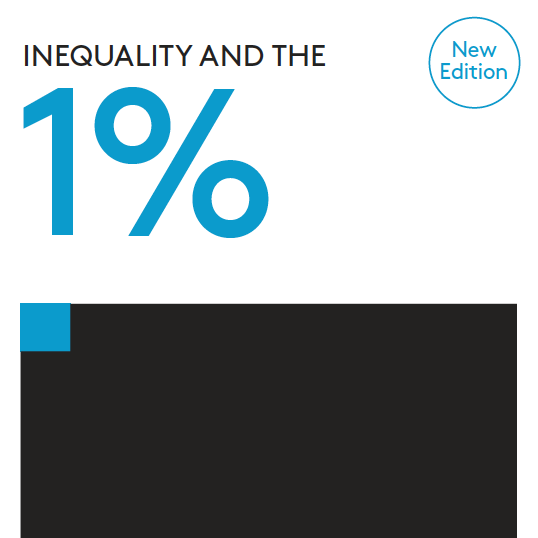
Dorling, D. (2014) Inequality and the 1%. Verso Books. Dorling highlights the gap using relevant data and arguments on how wide the gap has become and how problematic this is for us all today. A great complement to Pickett and Wilkinson’s Spirit Level.

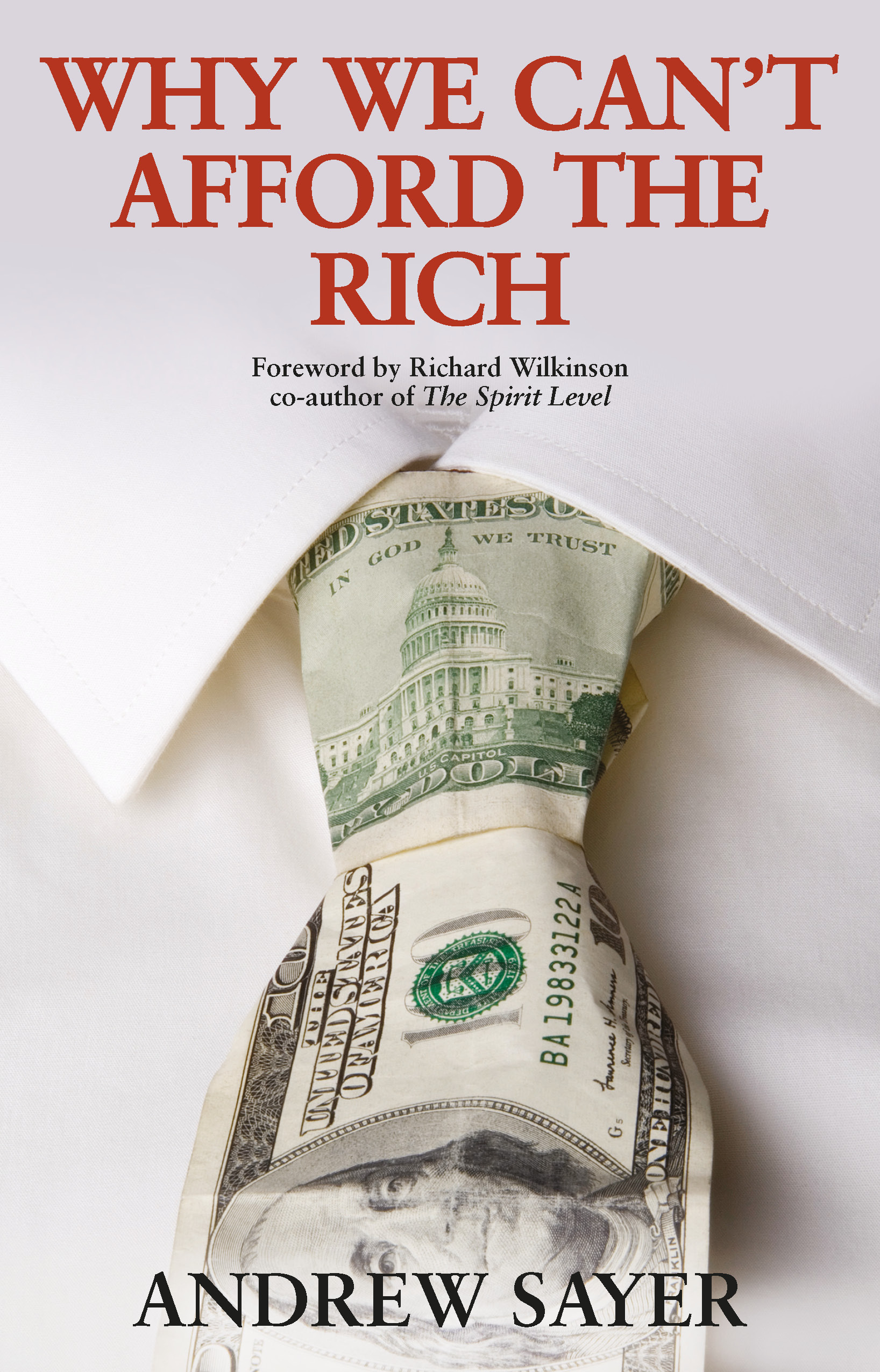
why-we-cant-afford-the-rich-fcSayer, A. (2014) Why we can’t afford the rich. Bristol: Policy Press. An angry and systematic analysis of the perversity and deep impacts of the rich on contemporary society, Sayer has spent a long time assembling deep arguments that highlight the problematic position and illegitimacy of excessive wealth in our society and others.

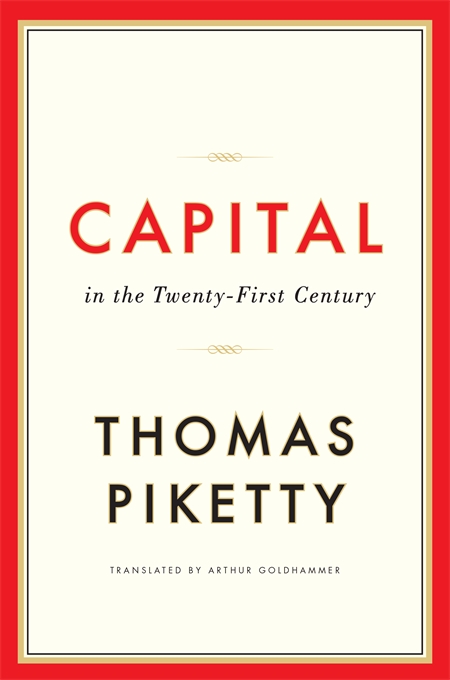
Capital_in_the_Twenty-First_Century_(front_cover)Piketty, T. (2014) Capital in the 21st Century, Cambridge: Harvard University Press. Read this or the summaries because you want the evidence base that explains the long-run fortunes of the wealthiest groups in society. If anything this is more powerful because it is from someone who is signed-up to the capitalist model of running things but who would join those pushing for swingeing cuts to the wealth bases of the 1%. This is the good news bible of those looking for a more equal society and ideas for how to do it, the writing is beautiful too.

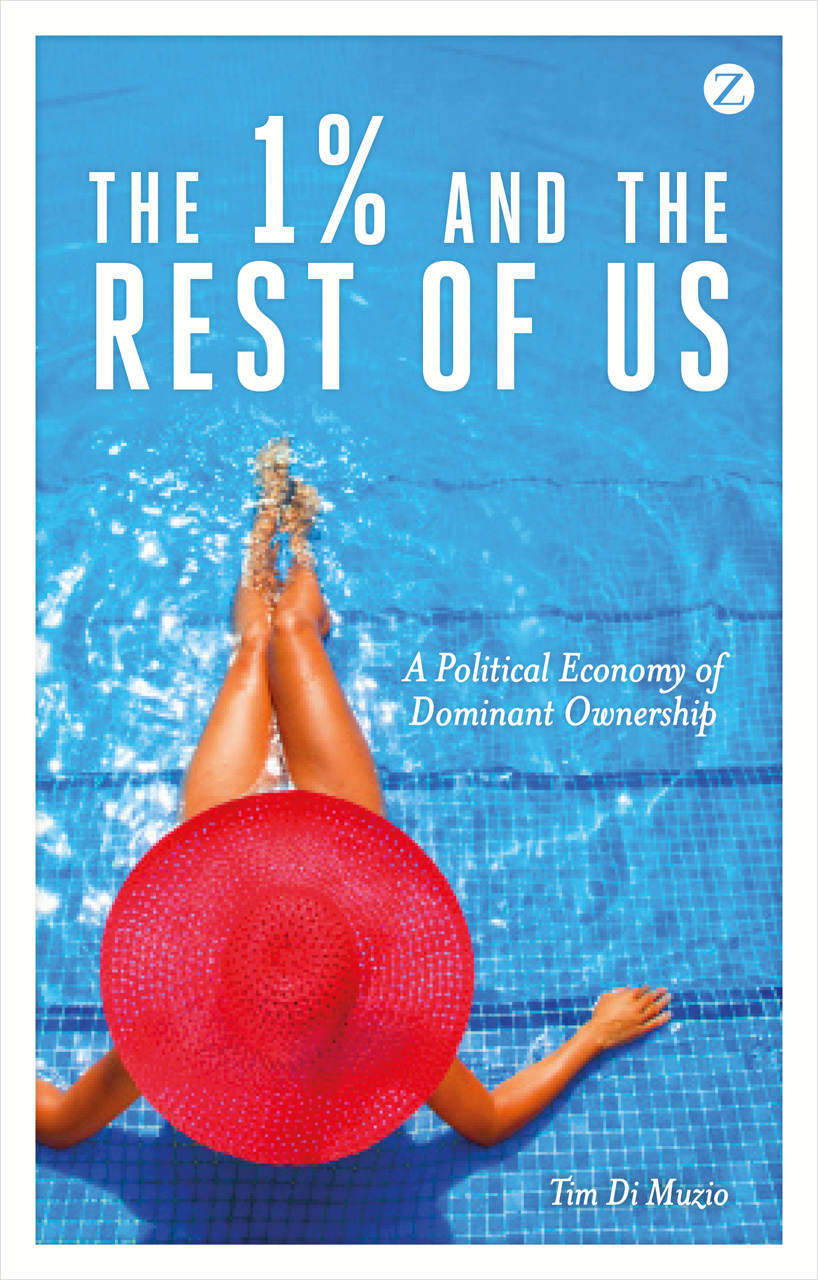
di muzioDi Muzio, T. (2015) The 1% and the Rest of Us: A Political Economy of Dominant Ownership, London: Zed Books. Examines capital and wealth as forms of power that affect the rest of us in subtle and more direct ways. Perhaps most interesting for thinking through the deeper political ramifications of what is going on that pushes back against the idea that TINA.

pinconPinçon, M., & Pinðcon-Charlot, M. (1999). Grand Fortunes: Dynasties of Wealth in France. Algora Publishing. A useful and very interesting insight into the lives of the true bourgeois families in France. Despite criticism from some quarters the book is a revelation and a great insight into the patrician sensibilities and everyday life of those who are wealthy but perhaps a long way from being the footloose, globe-trotting and more selfish super-rich of a decade and a half later.
plattPlatt, S. (2015) Criminal Capital: How the Finance Industry Facilitates Crime, London: Palgrave. Important for what it says about the culture of the finance industry and the impediments to reforms that might see a more effective stemming of the facilitation of mass criminal activity and laundering which, as Platte reveals, have become the everyday stuff of the global financial economy. It remains a thorny issue that governments will not challenge the cash cows of their finance/service economies and a source of great international anger. Worried about drug trafficking, corruption and the subversion of government agendas? Start here and gem-up on how it works.

51ZwR240C0L._SY344_BO1,204,203,200_Hay, I. (Ed.). (2013). Geographies of the Super-rich. Edward Elgar Publishing. Unfortunately you will be need to be rather well-off to buy this collection but it offers an excellent selection of very useful essays that goes well beyond social geography and takes in contributions from a range of social scientists responding to the charge that the rich had been getting away with it for far too long – look out for his new handbook, with Jonathan Beaverstock, out next year.

mindsAndreotti, A., Le Galès, P., & Moreno-Fuentes, F. J. (2014). Globalised Minds, Roots in the City: Urban Upper-middle Classes in Europe. John Wiley & Sons. Terrific analysis of the ambitions, choices and urban lifestyles of managers in three European cities. This takes on the idea that the upper middle classes have exited the urban system in some sense and reveals a grounded and engaged group, despite using education to get their children ahead. I don’t think this contradicts the work of others on the idea of urban secession by the very successful, it isn’t about the super-rich or gated dwellers but a great addition to the literature.

sampsonSampson, A. (2004). Who runs this place?: the anatomy of Britain in the 21st century. John Murray. A sad loss not to have writers like Sampson anatomising the establishment and dissecting them for all to see, arguably not supplanted by Jones’ The Establishment, Who Runs This Place? Offers a great insight into the key institutions and a prescient analysis of the international schools, mobility, influence and suburban presence of a growing class of the super wealthy that could have been written today.

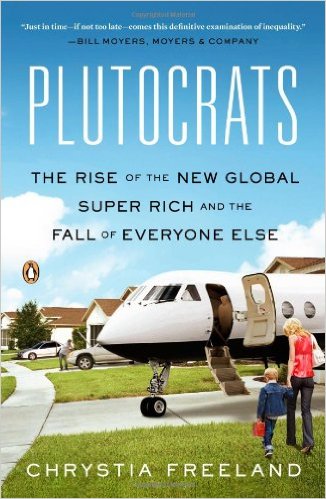
plutocratsFreeland, C. (2012) Plutocrats: The Rise of the New Global Super-Rich and the Fall of Everyone Else. Penguin. This books is interesting for being one of the few to say something about the rich themselves, using interviews and anecdotes we gain an impression at least of the hyper-mobility, the bitchiness and competition within the ranks of the super-rich themselves. This is a light treatment but the arguments about ‘cognitive capture’ of politics by money is important and worth remembering.


Films

The Mayfair SetThe Mayfair Set – Seminal film from Adam Curtis that explores what the establishment did following the realisation of the declining place of Britain on the world stage and murky adventures in the arms and other trades. James Goldsmith’s off-shore palace, which features in the documentary, is now a luxury hotel.
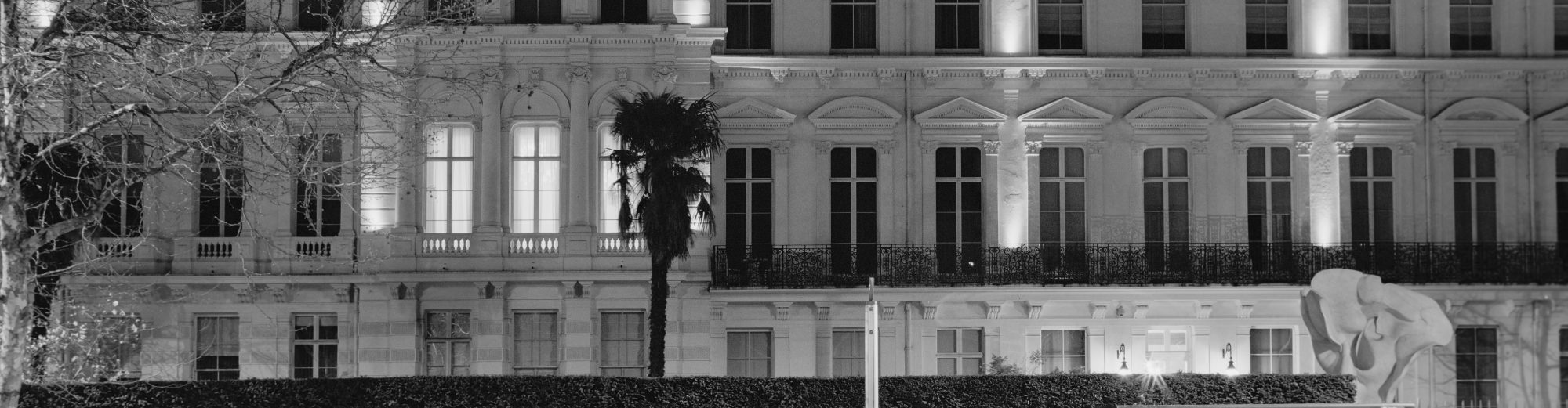

A seamless, floating space: Mobility, the super-rich and London

One way of thinking about the wealthy and inequality in our cities is to consider how they circulate and engage with public spaces, to what extent are the super-rich really engaged with the city and why does this matter? Themes of privacy, security, status and London’s relative safety emerge as key to these flows.

Iceberg homes and secure nodes

The Daily Telegraph recently gave coverage to a £4.5m home for sale in Hampstead. The house, notable for its price tag alone perhaps, was deemed distinctive because it was largely underground, sporting, in iceberg fashion, a barely noticeable street level presence that concealed an extensive and airy home and gardens below. Such homes are not a new phenomenon but they are increasingly prevalent and connect to the growth of a group of the very wealthy now living in London. As a sociologist one way of thinking through the implications of gated communities and fortress homes is to consider what these spaces say about and do to urban social practices and patterns of sociability – why are such homes created; what fears and aspirations do they respond to; how do such spaces reinforce and help to reproduce the existing inequalities of the city? Of course this is now a world of pronounced inequality and one in which the public realm and social investment are increasingly at stake in a political vision of the world in which trickle-down economics and naked personal ambition are feted by politicians and think-tanks. The result of these inequalities and social conditions is the production of urban anxieties that translate into bunker style homes as well as the opulent display of defensive measures like remotely accessed gated developments in more suburban gates, as affluent residents of the street in Lanchester’s novel Capital learn ‘we want what you’ve got’.

Elite gateway

To say that such anxiety is new is of course untrue, there are certainly continuities here, but there are subtle and qualitative differences with earlier concerns about a culture of fear as the gap between the very wealthy and others becomes ever more marked – domestic space is increasingly private and inaccessible as though wealth grants a permit to invisibility. Is this because of a fear of crime, a fear of intrusion, perhaps even a worry about public visibility, envy and a celebrity culture? In many ways it is a complex combination of all of these factors, but it also relates to changes in income, wealth and urban society generative of changes in the built environment of the city. Much has happened to make London it a rather different city from even a decade ago. Part of the story of these changes is certainly about the moving frontier of gentrification and displacement that now takes-in the destruction of good public housing in return for private and ‘affordable’ apartments but and scant new council homes. The changes are also linked to the increasingly composition character of households in the city, many of whom are largely absent, international investors as well as those who appear at key moments in the social and sporting calendar. In the background changes in housing affordability, austerity and critical changes to the conditions under which welfare support is offered have also had massive impacts.

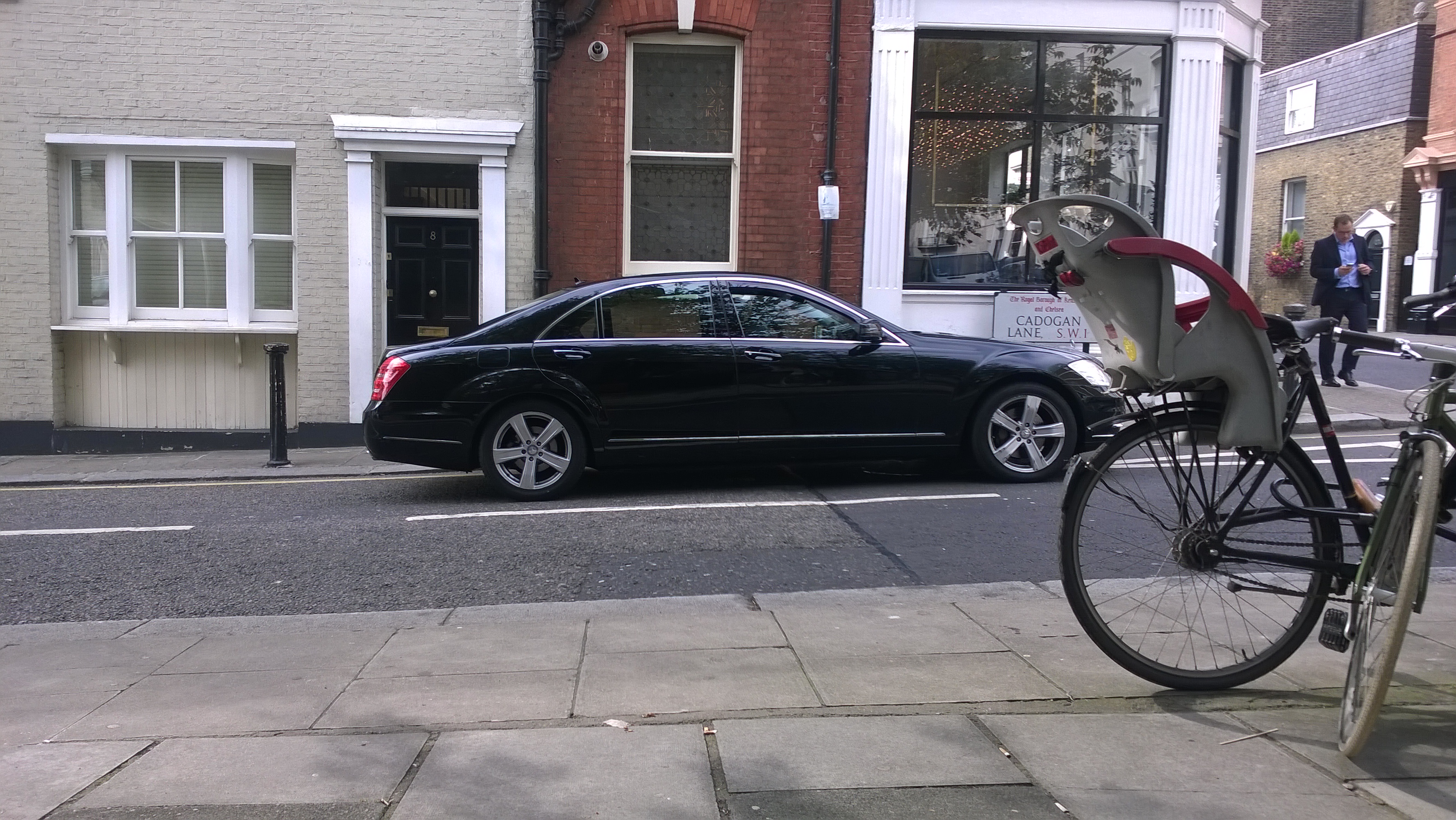
WP_20140917_034

The changes we have seen in London and the appropriation of positional homes by international capital say something about the desirability of this particular city for those looking to invest and make further gains (the argument of economics), but they also say something about the nature of London’s urban culture and built environment which facilitates a lifestyle conducive to a group whose steps into public space are often timid, or at least wary of where and who is safe (an argument of the role of culture). As many wealthy people suggest, when one has money the character of the world around becomes more pushy and potentially threatening.

Domesticated public spaces linked to fortified home spaces

In this context debates about cosmopolitanism, inequality and territory have ensued – who is London for and who do its political class really serve? How do the wealthy move around and through these spaces and what, more importantly, do these mobilities say about their own social politics and connection to the wider citizenry of the capital? Of course insights into these patterns are hard to discern yet are important to a broader evaluation of the value of the wealthy to the city, in both social and economic terms. In fact much of the narrative around London for the rich is that the city is a safe place, in both social and economic terms. For one thing, having money confers the ability to occupy a home that is a fundamental base from which forays into public and other private spaces can be made.

WP_20140917_042

Elaborate security systems, a supporting cast of staffers and other services enable a seamless engagement with space are all in place and emanate from the domestic realm. The ultimate goal of many buyers is a space that allows drive-in car parks with internal exits (common in many of the newly planned skyscrapers for the city to come in the next decade). The poor doors of apartments alongside Versace interiors at the Battersea power station (Nine Elms) development are but one example of the ways in which the wealthy flow around the city almost in tandem with its wider population yet are impermeably separated – tinted glass, locked taxi doors or in lifts that piggyback on those used by lesser residents among other strategies of distance and control. In this sense the wealthy are not an extra-territorial presence in cities like London but enjoy the sense of being threaded through the fabric of the city while being able to negotiate what are seen to be more risky groups and spaces. Co-ordinated forays using personal drivers are an essential element of these networks and allow the conspicuous trappings of wealth, relatively unremarkable in such an affluent capital, to slip from view via communication by phone. Yet, for them, the city appears as a delightful and open system whose emissaries welcome them in the form of ushering estate agents and no less entrepreneurial politicians.

A politics of invisibility

Despite the privatisation of public spaces and ongoing debates about the forced expulsion of the homeless, those on welfare and modestly paid workers, London feels as though it embraces the wealthy. The renewed politics and legitimacy of austerity is not so much ignored, rather it is simply not part of this world, indeed it has helped to protect it. Yet the mood of the city can only remain bullish to the extent that it denies an interest in those struggling with a straining infrastructure of over-priced homes and crowded transportation. The search for a space that is safe leads to London for many international buyers and those with money more generally, the sense of danger found in many other national capitals fades from view even if the instinct for safety never dies. London works because exposure can be limited and because districts and schools can be found that match needs which will not be compromised on. The implication, to return to the example of the iceberg home, is the existence of a fortress archipelago of gated and fortress homes linked by sealed mobilities and encounters with safe zones. Whether we care about the qualities and feel of this increasingly securitised form of urbanism is one thing, whether the excesses upon which it is built will be challenged is perhaps quite another.

WP_20140917_052Thia blog is a version of this freely available article: Atkinson, R. (2015). Limited exposure: Social concealment, mobility and engagement with public space by the super-rich in London. Environment and Planning A, this blog also appeared on the LSE politics blog here.

Snooty City

Can we now say that money is breaking the city even as the veneer of Versace apartments with poor doors and homes with car lifts glosses over these realities?

In a recent Agony Uncle tirade the FT’s columnist David Tang lamented the kind of service now offered at the most lavish hotels and restaurants. In tandem with the increasing numbers of super wealthy clients hotel staff, he suggested, felt able to treat all but the richest with disdain as they fawned over these arrogant and rude clients. There is more to this vignette than first meets the eye. Cities like London are being made for the whims of money and the power that it bestows: Politicians fawn over the largesse of tax-paying high net worth individuals as though the city should be grateful, developers chase the premiums they can derive from designer interiors and lavish features while construction for affordable (don’t even dare whisper the prospect of public housing!) is almost non-existent.

In many ways these changes have occurred because the UK wealthy have been joined to all intents and purposes by a huge wave of international money and rich people seeking to invest or live in the city. The uprating of spaces and services in pursuit of this wealth thus damages and displaces the ability of the city to be a place for all people in which essential public services and spaces should be retained and paid for from the public purse. A great change has thus occurred which doesn’t simply take us back to an Edwardian era of massive dynastic wealth and leisured elites but a city the logic of which is a new and diverse set of elites who are often not in and perhaps not for the city. Like HSBC of late the risk of chasing this money is that another cultural hotspot does it better or cheaper in future or offers greater incentives to mobile capital and footloose investors. However, the real damper on this possibility is that many of the wealthy do not see London as a substitutable space – it has an almost unparalleled social calendar, cultural infrastructure, personal and financial service sectors. To live there, part or full-time, does not in any case mean that other places and spaces cannot be accessed when fancy takes hold.

In the background to this the state of national and urban politics is fragmented or supportive of these changes. What will happen to a city so beholden to its financial services? What if construction were starved of financial oxygen despite building expensive boxes that few will spend any time in? Why can’t a more inclusive social politics be built around the needs of the absolute majority of urban residents who are not served and indeed excluded by these changes within mainstream political life? Is the underlying reality of these changes the result of a political system in debt or thrall to the logic of money, despite the negative consequences for so many residents? The butler class of politicians appears to subconsciously react to the needs of a growing, energy hungry and wealthy transnational group who flow like mercury in search of financial vehicles that will serve them best and to countries to which they owe no real allegiance or patrician interest. Can we now say that money is breaking the city even as the veneer of Versace apartments with poor doors and homes with car lifts glosses over these realities?

Crime, Capital

This is a brief version of my keynote presentation at the 2015 British Society of Criminology, following Elliott Currie, on the relationship between the city and crime, using data and insights from a longer-term project looking at the super-rich in London, funded by the ESRC.

I am very struck by the simple elegance of Elliott’s consistent argument that academic research should do more to take data and arguments into the public domain and conversations that need to be prepared before political action may be possible. However, I am also very pessimistic about the degree to which these domains can be influenced, or impacted. How do we make cities less unequal and less generative of the kinds of conditions that create such worrisome and unjust social problems? One way of responding to this challenge is to see cities less as sites in which crime is more or less concentrated/produced and begin to think about how cities act as systems which produce harm and which insulate policymakers and other elites from acting with greater effort to reduce these problems. The response of these elites in the wake of London’s 2011 riots was instructive because it gave an insight into the ways in which an insulated class spoke only with outrage about the actions of rioters and ignored the social conditions and inequalities that made such an explosive reaction a possibility. To return to the themes of much critical criminology, such a one-sided explanation does nothing to make future eruptions less likely, but remain compatible with the view that our elites act more to shore-up the interests of the wealthy and homeowners and landlords than they do the excluded produced and enlarged by conditions of austerity and middle-class welfarism.

The point I want to make today is that in cities, like London and many others globally, we find a wide range of deep social problems while, at the same time, the wealthy and its political class appear untroubled by declining social cohesion, massive inequality and the lack of housing. In years gone by analysts like J K Galbraith made the argument that inequality generated problems that exposed the wealthy as much as the weak, thus offering an inducement to reform – if we didn’t want to be exposed to a lousy public realm, the risk of public violence and declining essential services the rationale for tax and public investment was clear. Now these relationships are much less clear – staggering wealth combined with new technologies and mobilities allow the wealthy to make housing choices and decisions about how they move around the city that enable these problems to be circumvented or for micro-secessionary spaces (the Shard, One Hyde Park, The Lancasters, The Chilterns and other bunker-like spaces) to be produced around the principles of a private security club, to which membership grants the ability to essentially off-shore risks and social problems (as suggested in the dystopian film Elysium). These possibility raises two questions for me. First, how does the city and its spaces affect the mentalities and dispositions of those in power and their relationship to social problems? Second, what is the role of the financial base of the urban economy in facilitating crime and regional instability in locales globally? These questions are both related and mutually reinforcing, as I shall now elaborate.

One way of thinking about London’s contemporary social milieu is to use Robert Sack’s (A geographical guide to the real and the good) arguments about the relationship between place and understandings of social reality. Sack invokes the idea that places are more or less good/bad, moral or immoral depending on how they allow us to be connected to the communities and life of the world of which we are a part. Cities like London have become difference machines that sort wealth and illicit gains from poverty and exclusion and which generates segregated and insulated spaces. Going back to my point about the riots it is important to try and understand how these bad places (what David and Bertrand-Monk called evil paradises) celebrate a form of urban culture and space that permits disregard, aloofness and disinterest in the casualties of the urban and national economy and its now withering welfare system. The perverse triumph of such a city is to cleave away the socially marginal and to neutralise any externalities or risks that they might generate for the affluent, indeed to remove them from view by virtue of the way that the wealthy flow through the city and engage with public spaces and the city’s population.

Neighbourhoods that cocoon and protect the wealthy help to offer an insulated worldview that may enable denial and disconnection from the wider problems of the city itself (now hit hard by austerity, gentrification, housing demolitions and welfare reforms) and the woes of the globe more broadly. Sack would call these immoral places since their daily life and physical seclusion enables a kind of distancing from the reality of the world around, an analysis perhaps particularly well applied to gated communities. Davis and Monk might add that the city has become a kind of evil paradise – appearing to offer all that is desired while denying the hard market realities of labour, high housing costs and possibility of a free-floating class of those benefiting from such an excessive system.

The position of the 1% and compliant policy elites is threaded through with illicit gains from international rounds of primitive accumulation, elaborate forms of property tax avoidance and the secretion of wealth into housing. For criminology the city has tended to be the place where most crime happens. Early bodies of theory offered us ecological and subcultural models of deviant conduct that were predicated upon a need to understand how inequality and the social sorting of the city into key neighbourhoods might help us to understand why people turned to crime. In today’s context the word crime appears increasingly blunt, not simply because of the wider attention criminologists pay to the notion of harm, not only because of the sense of global interconnections and problems that cities are a part of, and not least because we now recognize that we should pay much more attention to the architecture of our economies and the actions of the powerful in shaping its production. White collar crime is not simply about fraud but also about the way in which fraudulent instruments facilitate the actions of criminals in remote locations and to which the city and City benefit directly in the form of property investment and the use of ‘our’ financial services sector.

In these various respects the city is a fundamental mediating point through which a wide range of socially harmful acts are relayed and amplified. In various ways our theoretical positioning of the city in relation the question of crime, deviance and harm requires attention not only to the distributions and associations of variables for particular types of crime, but also to the way in which the city as a social/political and economic system is capable of generating harms that are located internally and at removed locations. London is a space where, to be sure, various kinds of harm and violence are enacted, but also a system built upon a finance economy that is deeply implicated in capitalist and criminal economies that span the globe. As Platt (2015) argues, to see money laundering as something that criminals simply do once they have their ill-gotten gains is a vastly outmoded perspective. Money in the system (from tax evasion, corruption, people trafficking, terrorism and so on) is in reality constantly courted by finance capitalism across the globe that vies for this trade alongside licit investment. We can suggest two results from this. The first is that the kinds of excess seen in property markets is a sign, at least in part, of the desirability of assets in a stable city within a globally unstable system. Ghost neighbourhoods and high house prices are the result (Transparency International). By extension we can understand these ‘gains’ as the result of a two-way process in which the security of the City’s operations acts to destabilise and facilitate crime and para-legal activity elsewhere. This system is going nowhere very soon despite public anger at the closet operations of individuals with dodgy backgrounds buying palatial property in London, the acts of multinationals off-shoring subsidiaries in fiscal refuges and other problematic practices. But there is something else at work here that we need in our theories of the urban and criminality and this relates to the way in which social space itself is wrought in ways that assist in the denial of the wealthy and political elites that someone is paying a price for these interconnections (this returns us to the arguments about the kind of milieu produced which I have discussed above).

Taken as a whole these changes not only further feed the wealth of the wealthy, they also amplify displacement pressures on those straining to maintain a foothold in the city’s property market. These are complex relationships and ones that have not hitherto been deeply considered by criminology. Urban studies and criminology can perhaps offer important contributions when set in tandem and to the project of understanding more about what is really urban about crime and which are barely captured by conventional notions of social ecology – notions of crimes of the powerful, white collar crime or social ecology don’t go far enough in capturing these complexities of crime, capital and politics. While the local implications of critical criminology are for better social supports, protective programmes and investments that offer greater social resilience and inclusion these proposals need to be supplemented with an understanding of how we might act at an international level to root out the deeper forms of inequality, excess/fraud and expulsion from livelihoods that permeate the global urban order. These are surely some of the greatest challenges for critical social science today and to which the efforts of accountants will be as useful as those of sociologists or geographers and the like. Transparency International (2015) have revealed through forensic analyses of documents that 36,342 properties in London have been bought through hidden companies in offshore havens and while a majority of those will have been kept secret for legitimate privacy purposes, vast numbers are thought to have been bought anonymously to hide stolen money (London has around 3.3m dwellings according to the 2011 census). On top of this the National Crime Agency (NCA) estimates that around £100bn could be laundered through the UK each year (1). These figures are only estimates of local activity and reveal little of the wider kinds of global disorder generated by these institutions, not the wider levels of fraudulent behavior within financial institutions that have so undermined public trust and fueled so much anger in recent years. All of this suggests that there is a need to channel incisive social enquiry into these zones and institutions and offer new ways of conceptualizing harm and its interconnections at the scales of the globe and cities more generally.

  1. http://www.lawgazette.co.uk/news/solicitors-prickly-economic-crime-chief/5045241.fullarticle

Losing our place? The unending cycle of gentrification and displacement

Talking to capital, photo Rowland Atkinson, 2014

Talking to capital, photo Rowland Atkinson, 2014

Gentrification is by no means the only way of losing your home, but it remains a concern for analysts of urban and neighbourhood change across the world. As the late Neil Smith was early to point out, gentrification has become a generalised phenomenon with the increasing marketization of land and housing the means by which many poorer populations have become more easily moved or removed in the wake of investment capital, or plans by city authorities to improve neighbourhoods. The logic of such plans has tended to be underpinned by a desire to court of capital, ambitions for local economic growth or the removal of blighted areas and poorer and more marginal social groups who are thought to be a block against an improved urban fabric. The power of Neil’s analysis was in the way that the systemic features of market economies were identified as unending motors of investment in cheaper urban areas. This has the effect of displacing poorer groups unable either to outbid or politically challenge capital as this becomes manifest in higher rents and house prices.

WP_20130531_012

Cashed-up hipsters, east London

These processes are perhaps not unlike Jane Jacob’s talk of catastrophic money in her book The Death and Life of Great American Cities where she made the distinction between more sustainable investments and plans for renewal and great waves of money that raised rents and values. Of course much of this story, in cities with large financial centres like London, or with new core economies like San Francisco, is connected to the changing economy of cities – with many inner areas becoming ever more desirable as more people are employed in service sectors and with ever larger income disparities that allow these groups to outbid and compete for housing resources in a market that has more generally become expensive.

WP_20140702_003

Perhaps one of the main things we should take from Neil Smith’s analysis was the sense that, failing regulation or systemic change, gentrification is hardwired into land markets, the choices of individual households and much larger flows of investment capital looking to make money via homes, loans, buying, selling and renting to others. The excesses and gains made by the wealthiest and profiled by analysts like Piketty suggest that these processes will only become more divisive and forceful. We need to understand more about this political economy of wealth since not only does being rich give us further advantages (including the ease with which more capital can be accrued), we also know that the architecture of finance capitalism and the choices of governments profoundly favours those with large amounts to invest – often in the name of creating better places and cities, even as they are increasingly emptied of poorer groups. To paraphrase my colleagues in SPERI here at Sheffield, we need a more civically minded capitalism that is harnessed and connected to the needs of people and society, rather than seeing the economy as something ‘out there’, with its own needs that are somehow separate from the society within which it operates and ultimately, to which it should be made to assist.

WP_20130530_001

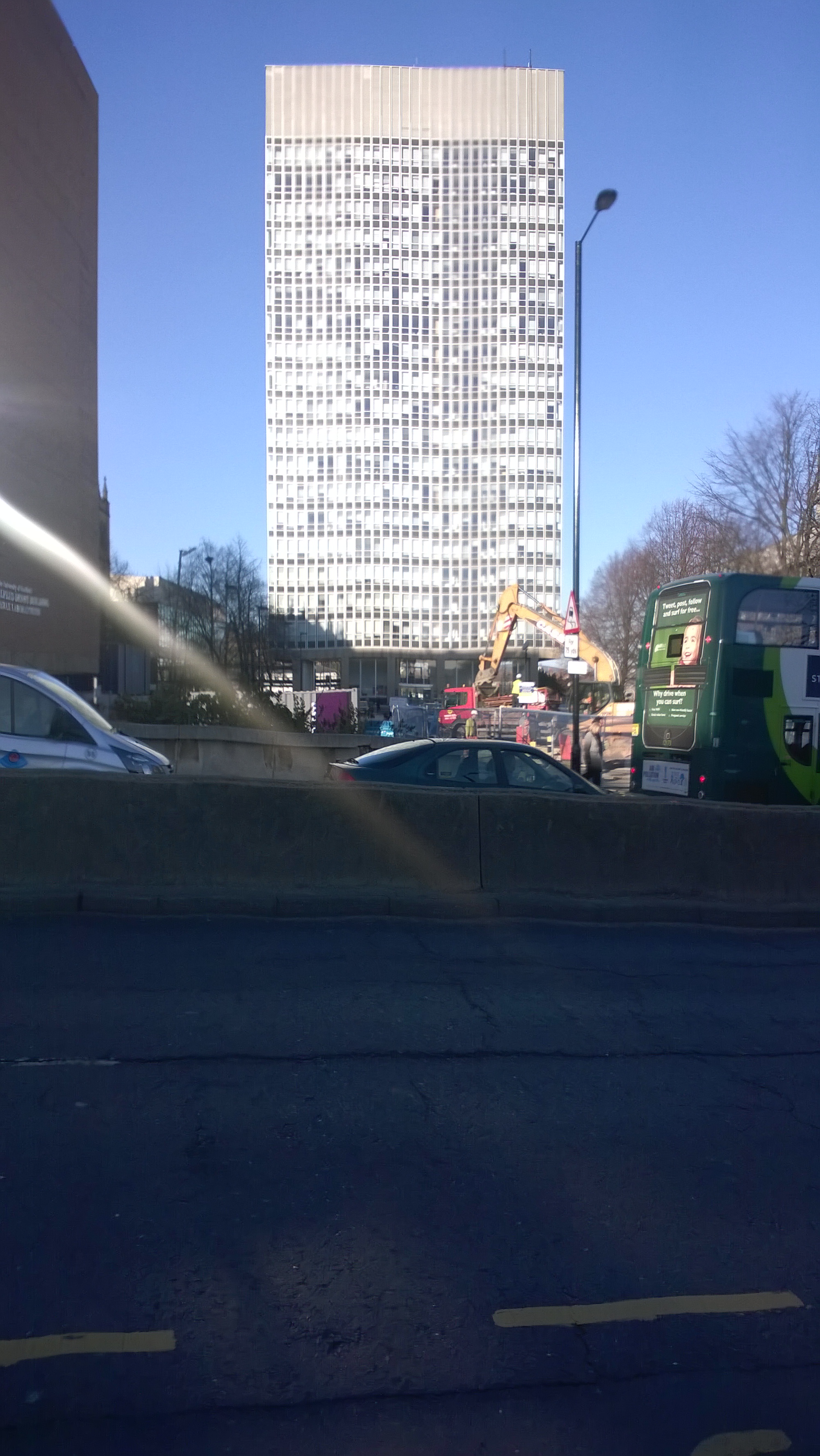
View of City monolith from Barbican estate

In cities like London the sense of symbolic change is increasingly palpable. This is a plutocratic city in the sense that money appears to have channeled and influenced political thinking (with the HSBC exit perhaps highlighting the ultimate fragility of thinking that government can ultimately court capital in this way), but is also influencing the look and daily lived experience of the city. The new Ballardian high-rise landscape on the Thames that is to come (more than 230 high rise blocks currently have permission), the bomb-proof bunkers in Knightsbridge and the many apartment blocks for buy-to-leave and buy-to-let investors speak of a system locked into in step with capital as a non-human and anti-social agent in urban life.

WP_20130529_022

Close to City of London and Barbican estate

All of this brings me to the nub of what I think is an important focal point for anyone interested in how gentrification (we might use the word inequality just as well) is changing and damaging our cities in the name of a system that is immiserating many people. The point is this – unless you have staggeringly large incomes or, more accurately, large amounts of wealth that you can invest in a home, cities like London are really hard work and increasingly socially sterile places. The possible counterpoint about the rise of a creative economy is almost redundant in this context, both because it could never match other sectors in sheer power of delivering jobs to the many, but also because it is often the advance sign of gentrification itself. These processes make many citizens, even the quite wealthy, feel that the city is only partially theirs – their children are struggling with debt and the prospect of a lifetime of renting, transport infrastructure is improved but overloaded, housing provides gains in personal wealth that evaporate when seeking to buy another home and we increasingly witness social distress or its evacuation to other locations that generate guilt among the privileged and anger among the excluded.

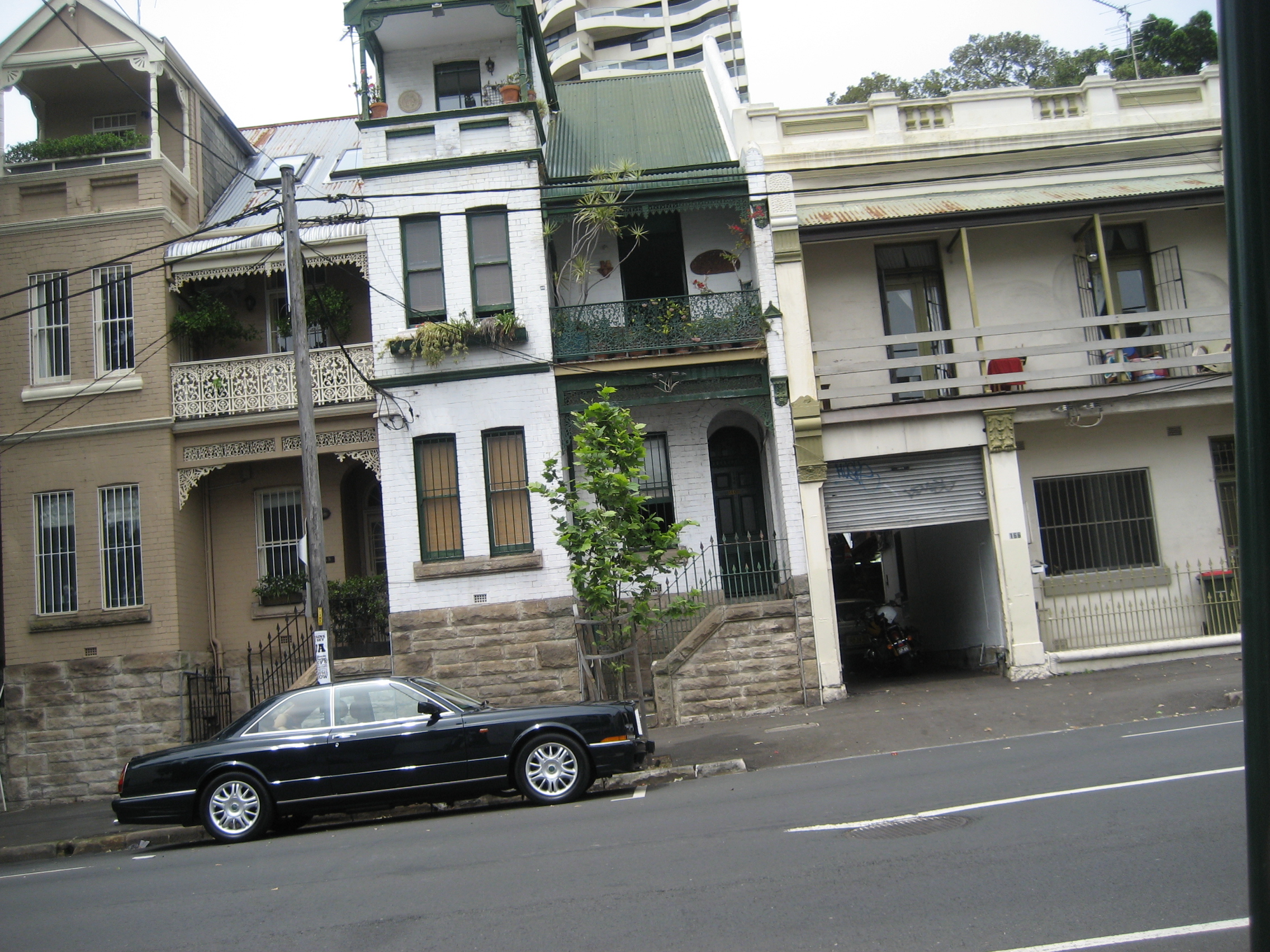
Sydney

Sydney

This means that whether we or others are displaced we can still experience a deeper sense of displacement – that our homes and our city are not fully ours and that, if we are not one of the wealthy, neighbourhood change and gentrification might also unseat us at some point. This lends suggests that recent and popular ideas about the undermining effect of precariousness in labour markets could be fruitfully extended to consideration of housing and the daily life of the city. In this sense gentrification is neither going away nor somehow less important than it used to be – it offers a sense of a moving and deepening line in the divisions of urban life.

Useful sources

On gentrification and symbolic displacement (free access to anyone):

Atkinson, R. (2015) Losing One’s Place: Narratives of Neighbourhood Change, Market Injustice and Symbolic Displacement, Housing, Theory and Society. http://www.tandfonline.com/doi/full/10.1080/14036096.2015.1053980

On London as a plutocratic city:

The power of raw money http://mondediplo.com/2015/05/14london

How do the rich live? http://mondediplo.com/2013/12/15london

Cities of the rich http://mondediplo.com/2010/12/22housing

On gentrification as a global phenomenon see: Smith, N. (2002). New globalism, new urbanism: gentrification as global urban strategy. Antipode, 34(3), 427-450. http://www.ingentaconnect.com/content/bpl/anti/2002/00000034/00000003/art00005 Google to find free copies of this article

On the social cleansing of London see:

http://www.theguardian.com/society/2015/may/06/london-council-social-cleansing-row-move-tenants-to-birmingham

http://blog.shelter.org.uk/2012/04/exporting-homelessness/

https://www.thebureauinvestigates.com/2015/05/26/dismay-doesnt-do-it-justice-how-a-secret-system-was-used-to-axe-hundreds-of-affordable-homes-on-britains-most-iconic-construction-site/

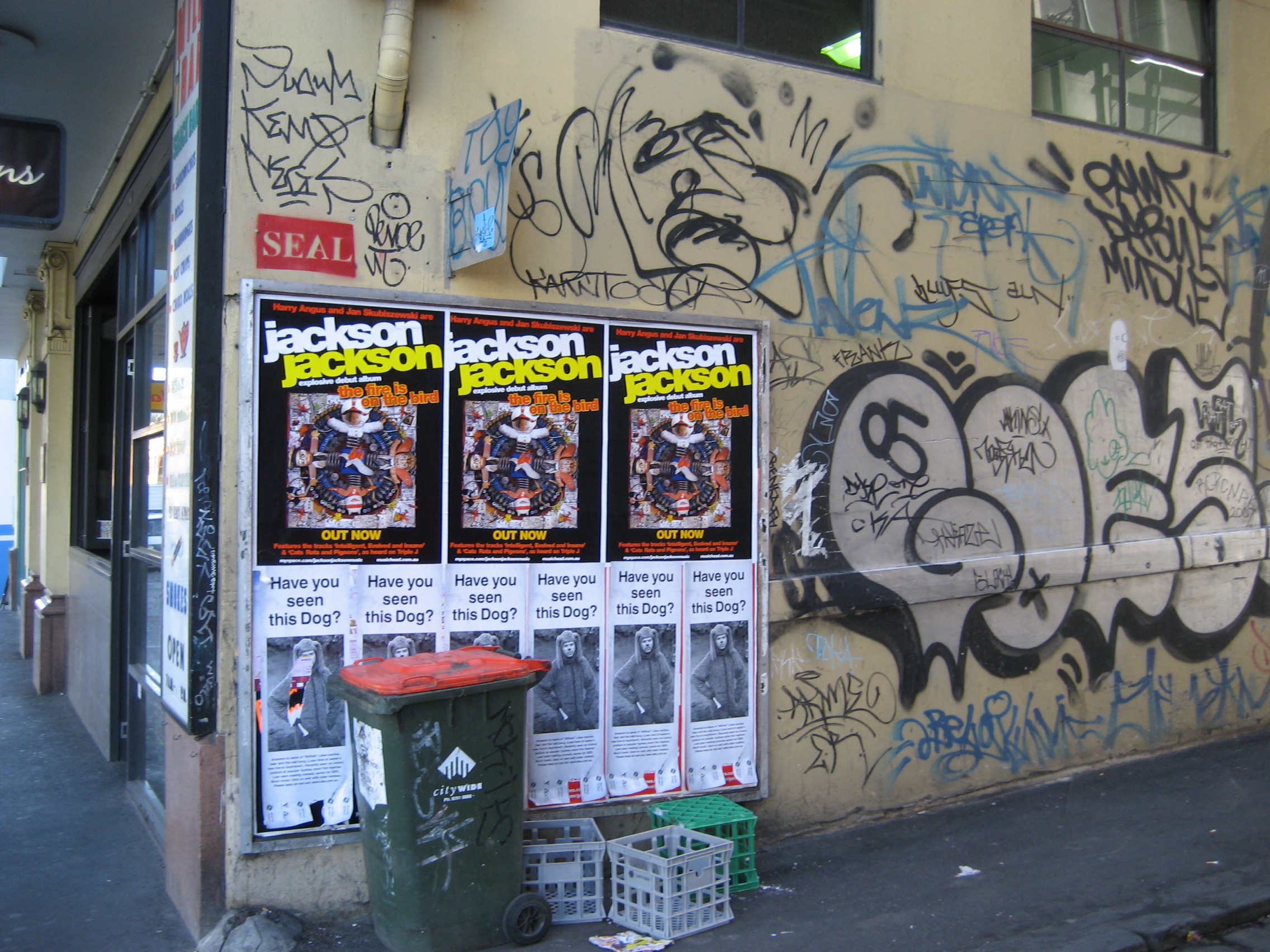
IMG_1388

Have you seen this dog? Melbourne’s creative core

Becoming a communiversity: Thinking about what and who are universities for

Becoming a communiversity: Thinking about what and who are universities for

Rowland Atkinson, Lee Crookes, Andy Inch, Marion Oveson and Tom Shore

WP_20141203_001Sheffield is a civic university and, like many others, it espouses an outward-facing and connected sensibility. It is also notable for being an institution that was funded by public subscription and in this sense the university retains a debt of gratitude and a duty of care to the city. But surely we should argue this for all universities. Yet at least one of the anxieties about switching funding from direct grants to an increasingly debt-financed model* is the sense that universities will be made more exclusive. From the outside universities can seem intimidating and elites spaces far from being a common resource for the development of relevant ideas, plans and designs – spaces in which socially-relevant and useful ideas can and should be forged, alongside those outside them who might benefit. Those in the social sciences who so often feel a sense of duty and interest in the common good are however only one segment of its population and many in the social sciences are not only more or less committed to progressive social change, they are also more or less burdened by the pressures of teaching and writing which sometimes disconnect academics from the possibility of achieving real results from their endeavours – we may become too busy to care, hunkering down in survival mode, or pursuing lofty goals of excellence without reference to the immediate conditions around the university itself.

Surely this needs to change and the goals of our auditing processes be made to line-up more closely with the importance of viewing universities as organisations that form a bedrock of a stable resource for excluded communities and a source of knowledge and ideas around how to deal with local social problems. To be blunt, many of the imperatives facing academics tend to militate against them being more accessible, open and self-evidently interested in their local communities, excluded groups and civic society more broadly. How might we better ensure that the university as an institution retains and builds resources for the cities and communities it is co-dependent on? Can community groups and individuals be made to feel that they will get a hearing from academics who, it may be feared, may look down their nose at someone who has interrupted their stream of lofty thought! Even if those within the academy would welcome such contact we need to do more to appear receptive to such contact and find mechanisms by which those with questions may more easily find those who may have ideas or answers.

Social divisions are not hard to find – do universities feel they are there to help with social problems?

In Sheffield there is certainly a deep sense of commitment from many colleagues to the city we are in. As a post-industrial heartland the place remains unequal and, in many spaces, poverty stricken. Colleagues are involved in city-efforts around a Fairness Commission, profiling social problems through a series of State of Sheffield reports and spending time in organisations outside the university. These efforts have, to be sure, been with the help and interest of organisations outside the university and it has generated a sense of commitment and the idea that the university is a resource of and for the city. As many academics will recognise, the idea of somehow being brilliant in a particular field is often seen as implying work done elsewhere – excellent work is somehow something international. But are there other ways in which the privilege of universities and the privileged who benefit from its setting can be locked more closely into step with the needs and ambitions of the wider population? Our event, Communiversity, was an attempt to think through these thorny issues.

Changing community formations and structures present challenges - who is the university for, and why

Changing community formations and structures present challenges – who is the university for, and why

The Communiversity event began with little in the way of an agenda, rather it was a day in which folk from inside and out of the university were invited to discuss the challenge of what we think a university should be for its local communities. Should we engage outwards or invite inwards? What is effective and what are the barriers? More than sixty of us listened to presentations (from, we confess, mostly academics!) thinking through these issues. At the heart of this was the question of what a university is and who it is for. Not least, will fee-paying students act as a further force that stakes out university resources as being only for those paying for them? The day had a great atmosphere (a link to a series of podcasts and a write-up of the day’s proceedings will be linked to soon) and a real sense of interest in the ideas from many who find the university a rather, perhaps benignly, inaccessible place. The burning issues to come from the meeting focused on:

  1. How can the university and its staff be made more legible to those looking for support or knowledge? This proved to be a major point and one to which we will move forward with a working party to try and resolve. There are models out there but one question is the extent to which all scholars could or should be made to sign-up to being available to excluded communities outside the university (and perhaps how to incorporate this in workloads and in wider mission statements that tend to focus on the utility of knowledge for business). In other words – could there be a single point of contact for outside organisations to contact/connect with regarding their area of interest/question?
  2. It’s going to get much worse, as statutory services are being cut voluntary organisations are dealing with people with major problems – can universities help under these conditions and given their relatively more stable funding flows? Could some of this funding go towards supporting community-university partnership projects?
  3. Complexity – how do we deal with the fact that many within universities find their own institutions large and difficult to ‘know’ and may struggle to understand the range of institutions outside?
  4. How do we make large institutions that affect the economy and built environment of the city in such profound ways to be more transparent to their host cities? This proved to be a key point to which many felt passionately that there should be more engagement, despite the difficulty of consulting effectively. Even the buildings of a university and its future planning have a large and direct impact on the fabric and daily life of the city around it.
  5. Just ask the question – Many academics would really enjoy being approached directly. No doubt this remains difficult – how do you find out whether some is willing to engage and where expertise lies?
  6. Universities could/should be running spaces in which conversations about the community/public interest can be aired – a critical point and one which needs more widespread debate. Universities still receive significant public monies and their mandate as spaces of public conversations needs reinstating under conditions in which a narrowly utilitarian model of being useful to the economy prevails. How do we do this without taking ‘business’ away from community organisations who offer venues to the public and do this fairly? Similarly, how might we get the most dis-engaged members of society to; know about this, be interested in taking part, and feel able to cross multiple barriers in order to participate?
  7. Given current pressures in universities around outputs, income generation and the relatively short-term, project-based nature of research funding, can academics make space for the development of much longer term, mutually beneficial relationships with local communities that are built on principles of trust and reciprocity which don’t subside once funding is over and expectations have been raised.
  8. In opening the university up, how do we address the risk that greater engagement will privilege those who already possess much social and cultural capital; those who already know how to access university resources?
  9. How do we start a broader conversation in the city about who/what the university is for?

These points form the beginning of our efforts to continue to think about the role of the social sciences and universities to stitch together where possible mutual needs and ambitions to see these goals as paving the way for deeper social justice, sustainable dialogue and the opening-up of resources where it makes sense to do so. We hope to report back on these issues as we move forward with community partners from this first event.

DSC00940*students borrowing to pay their fees, which they pay back if they reach a certain income


Cities under a Conservative government – Stress, Division and Dissent?

What will this election result mean for our cities and for questions of inequality, social division and fairness? What will urban political life be like under a now fully Conservative-led government, without a coalition and a likely fractious relationship with the constituent parts of the UK? Will a housing crisis, migration, segregation, crime, health and education form key areas of social policy that continue to have dramatic spatial consequences? Here are some thoughts:

Urban Policy – What urban policy? We have seen very little in the way of concerted spatial planning and policies to adjust regional and neighbourhood inequalities. Is there prospect to see more action in this direction? This seems doubtful and that local social and physical conditions in the most deprived neighbourhoods will remain off the radar and worsen. A callous politics of disregard for social need is unlikely to change under a bolstered mandate for the Conservatives. Promises of a northern powerhouse economy will perhaps be renewed, if only to take some of the heat and pressure out of the south-east while offering a real chance of improving national economic prospects. Without more concerted action to act at the level of the neighbourhood conditions will deteriorate but this is not a government born of form in this area of policy, with those on the ground left to pick up the pieces.

Picture3

Housing – Will we see increased house building and a move to address the problem of intergenerational shifts in homeownership? This may be unlikely, for both practical and political reasons but there is an increasing danger of indebted middle-class entrants to the labour market finding cold comfort from this area of policymaking. The new government will have to balance being the representative of existing owners keen to maintain or build their own equity (not least to help their children have any chance of entering ownership) and representing the needs of renters desperate to escape a shoddy and predatory rental sector run for the benefit of landlords who are, in many cases, themselves homeowners. Can this continue? Unfortunately yes. Alongside this an almost stationary public housing programme and the now haunting refrain of a promise to look at a right to buy for housing association tenants will focus the attention of housing professionals and anyone interested in how to deal with housing need. NIMBYs will continue to scupper new developments, whatever their tenure, under the localism agenda. None of this bodes well and could form the focal point of a more explosive social politics in cities like London where housing stress is an all-encompassing concern, even for those on very high incomes.

Spatial divisions and inequality – The previous coalition played hard to a crowd who masochistically believed that austerity was the necessary goal of government, while privileging those who were already immune from the impact of the global financial crisis. It never seemed that there were enough, and clear enough, voices saying why this was wrong in principle and in practice. This is a rich country and in many of the ‘leafy’ constituencies that have been buoyed-up by those espousing a story of necessary pain there has been very little pain for they themselves. This kind of politics is unlikely to be tolerated without anger or protest by those who felt that Labour wasn’t strong enough in its proposals to redress inequalities and those who felt that politics (rather than political action and debate) was unlikely to do anything to change what seemed a very broken society. The spatial consequences of likely policies around tax, contracting-out, health, education, policing and crime and housing will fall heaviest on those least likely to be cared about by a newly confident administration. The traction of popular understandings of inequality, austerity and class-based revenge will however likely increase and we can expect a real anger and energy to debates about the way that the poor, precarious and vulnerable have been ignored. The longer-term emergence of a new group of precarious, damaged, stressed, futureless and the angry (and risks for a renewed rise in crime) will seem unlikely to puncture the bubble of ongoing affluence. For those in the middle, despite worries about their children’s prospects, life under the stewardship of those looking out for them will likely continue to feel like a rather cosy John Lewis advert – saccharine but also filled with nostalgia for a safer and homelier world.

Going up? High Rise Housing, Wealth and Social Alienation

Jephcott's Homes in High Flats, 1971

Jephcott’s Homes in High Flats, 1971

The politics of wealth, inequality and austerity are hotting-up in the run-up to the general election. Anger is pervasive, from all political sides but the ‘mediamacro’ presentation of the reality and need for continued austerity remains intact it seems. This is particularly depressing for those seeking to launch renewed optimism about the possibilities for reform, progressive taxation (getting those into it who should but aren’t and those avoiding it) and initiatives to address major issues like the crisis in housing affordability and provision. Cities, like London, are spaces of dramatic excess or continued social abandonment. Yet many of those renting (public or private) in London sit adjacent to massive changes to the built environment that speak of the extraordinary excesses of consumption and accumulation among the very wealthy, despite one of the largest historical economic reverses the country has known.

There have been some excellent analyses of London’s and New York’s dramatically evolving skylines environments recently, pointing out that much of this landscape is an exclusive landscape, off-limits to those distressed and upended by the property market across the city. In the context of ongoing debates about what to do about the super-rich (as though they were inseparable from the operations of an expanding, more global, neoliberal and capitalist system) this transformation is nevertheless notable. As human societies it seems curious that the possibility of such a new landscape could not be applied to the need to face-down much social need. ‘Going up’ will not mean helping out. Yet one of the most curious features of the changes happening in London is that high rise has shaken the taint that we continue to apply to tower blocks and public housing estates – it is social composition and only partially design that separates these structures.

Talking to capital, photo Rowland Atkinson, 2014

Talking to capital, Rowland Atkinson, 2014

I was particularly struck by this change when I recently picked-up Pearl Jephcott’s study of high rise living in Glasgow from 1971 (Homes in High Flats), there is much to think about here, particularly in the context of super-prime real estate that suspends residents for the scant time they spend in these homes. Even by the early seventies the story of a new utopia was facing a rapid turnaround in fortunes for a model that had initially appeared to offer good, clean living after the mess of the slums and tenements. Jephcott’s study had meticulously considered the problems (the difficulties for families with children, noise, new feelings of isolation within vertical communities and emerging anxieties about crime) including measuring the waiting times of lifts in a rather interesting appendix! Yet this story appears old now, almost as done and dusted as many of the blocks themselves and system-built complexes like Pruitt Igoe, destroyed by another administration that had done as much to fail its own experiments by defunding it as changing social conditions overtook its initial promise. But this story continues to unfold. A recent report suggests that around 50 estates have been remodelled in London to add homes of other tenures but we also know that these stories have generated evictions and net losses of affordable homes – new rounds of expulsion in the wake of cash-strapped local authorities facing the lure of investment from private investors.

Today high rise means high profits for developers on small land footprints, increasingly conspicuous displays of wealth and panoptic views of the city for the partial elite of residents who spend perhaps only a few weeks there, leave it to grow in value unoccupied or decide to let it out. In this context it isn’t surprising that high rise can be made to deliver (despite of course the obvious anxieties that followed the attacks on the World Trade Centre fourteen years ago and after which predictions quickly emerged that high rise was doomed as the potential target of future suicide bombers). What is more surprising is the dearth of imagination and means that might see public investment channelled to deliver more housing to those on more modest means in a city with such stressed physical infrastructure. These new rounds of construction spring from the ground because they are connected to flows of capital accumulated across the global economy, both because of and despite the economic downturn. Anyone who follows the FT’s How to Spend It, their property section or the websites of the elite property vendors and luxury goods houses will know that the consumption of the rich, and their number, has been one of the most recession-proof stories at a time when housing stress, homelessness, food-banks, beds in garden sheds, precarious and zero hours contracts mark the life of the capital outside the bright lights of the super prime areas.

It is interesting that we have moved from visions of the catastrophe of tower block living, widespread height reduction and demolition programmes and the block as the stand-in for social distress and crime in popular films and news media to the shiny new landscape of the world cities and their Shards (London) and Nordstrom (NYC) developments. The residents of these blocks may already have gone mad from boredom, like the residents of J G Ballard’s High Rise (1975), who descend into chaos and warfare between the levels of their brand new block. Unlikely perhaps. But the deeper commentary that Ballard was offering rings true – a concern about an alienating physical environment, the boredom of affluence and perhaps most importantly the barely concealed violence of the wealthy. Is a city that only provides for the wealthy in the face of need not pathological? The imperatives and logics of capital accumulation, purchase, investment and renting will always trump the concerns for a city more grounded in the attempt to tackle human need unless we say it is wrong. If the height and structure of the 260 plus high rise blocks in London’s centre are an index of anything it is the de facto callousness of political systems and politicians who suggest that this is the only game in town and, worse, that somehow this benefits those on no and low incomes. It may seem a rather obvious observation but surely we need more than ever before to being these ambitions back down to earth and make cities like London work better for all citizens.

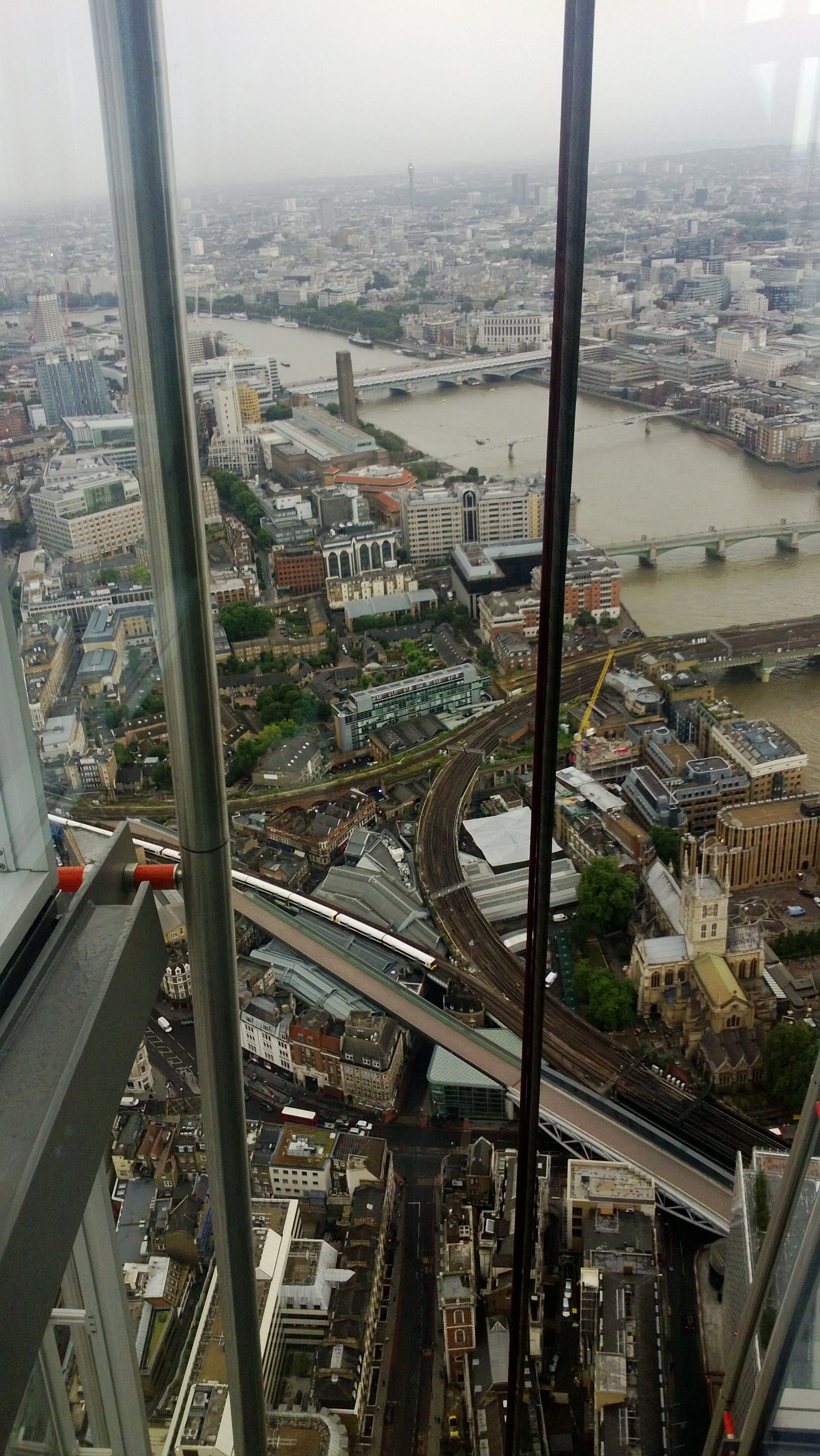
View from the Shard, Rowland Atkinson, 2014

View from the Shard, Photo, Rowland Atkinson, 2014

The sonic island: Urban noise and the value of isolation

Islands have long fueled an imaginary filled with the possibilities of mental and psychic escapes, whether indeed we are able to reach them or not. The desire to disconnect is relevant more broadly to concerns about growing urban noise levels which generate an invisible, yet no less perturbing, sensory layer. Can we find ways and means of creating island spaces, in physical or sensory terms, that allow us to traverse or strategically engage with our cities in ways that allow the personal management of noise exposure and the need to get away from it all – while largely remaining put. The strategies of urban citizens used to find quieter pathways, searching out oases of reduced sound and the widespread application of noise-reducing technologies suggest a deep-seated need for new kinds of islandness even while inhabiting the maximal points of population concentration that we find in cities. A clear focus of such tactics is to find control over, and freedom from, soundscapes where these impose a burden, distraction or even psychologically compressing and damaging experience. We may like noisy music, but less so if it is someone elses and the loss of control experienced in many neighbour disputes over noisy parties and lifestyles is perhaps the clearest expression of this problematic.

In our urban imaginaries the desire for escape which may also be realised as the search for real islands (such as the author’s search for quiet in the wonderful film Caro Diario, for example, as the travellers search for ever quieter and smaller islands after escaping the city to focus on writing). These needs were also expressed by the pioneers of the ambient music movement in the early 1990s where the phrase urban isolationism was regularly bandied around, as a means of encapsulating the search for a kind of ‘sonic island’ – a space-experience in which the body was cut-off from the density and penetrating noise of the city. Now we can find a widespread use of salt tanks, headphones, sound insulated bed pods, book-lined studies and noise reducing technologies which reflect an ongoing need for a therapeutic encounter with islandness within the city; the sense that with a reduction in the symbolic and auditory noise of contemporary life might come the ability to cope and flourish, all of this predicated on a form of escape that brings with it a greater sense of autonomy, control and meaning, whether this be through access to ‘real’ or metaphorical islands.

All of us need a place to retreat to, whether it be the home or another home-like space that offers the possibility of peace, escape and a sense of control in our lives. Where noise impinges from all sides in our lives the resulting stress is profound and debilitating. The desire to escape to the suburbs was arguably as much a wish to evade ‘The nerve wracking sleep-destroying noises of the city’ (Fogelson, 2005: 119) as it was to achieve newfound space standards and amenities. Even as technologies are developed to reduce noise or allow our shelter from it what Erving Goffman called the final ‘territory of the self’ is easily assailed by sonic intrusions of various kinds. Perhaps all cities need to ensure not only that housing regulations allow our homes to be free from noise but also that the fabric of the city contains planned calm spaces as well as parks (the two are not always synonymous and parks are not often found in central city areas) that enable decompression and freedom from noise. Precisely what such calmscapes might look like is perhaps the next challenge, but one that might be very popular!

Reference

Fogelson, R. (2005) Bourgeois Nightmares, New Haven: Yale University Press.

Home invasions – A discussion of Haneke’s Funny Games

This is a brief consideration of the film Funny Games. It contains the essential plot lines and is intended for those who have already watched the film.

funnygames1

It is true to say that I did not want to watch Funny Games. Like the film, my recent work* concerns anxieties around the invasion of the home, a project which has generated unsettling images, ideas and prospects in my own life. I knew the film was about a family who seem to be randomly selected by two young men who appear without notice, initially polite, the dialogue moves to a position in which social conventions are stretched before it is realised that something is deeply amiss. The householder’s prerogative to expel intruders is dismissed by the intruders and the viewer’s stomach knots at the realisation of the frailty of the family’s situation. Haneke sets-up the affluence of the gated home, the perfect family trio and their comfortable lives against a random moment. All are ready for a great fall into terror that will puncture the assumptions that they (and we) might have about the relative safety and sanctity of domestic life. As the ‘plot’ of the pair is revealed the mask of shared manners and expectations is pulled aside to reveal a calmly executed experiment both by the director and the protagonists themselves; the ‘game’ of mentally torturing and physically destroying the household step by step.

Funny Games probes a number of contemporary issues, the story of an invasion into the home life of an affluent family might itself be taken as a story of our times, probing deep anxieties and primal fears of social intrusion (the home as a place of escape from life outside the front door) and violence (home as the key but potentially vulnerable place of refuge from danger). In fact this is only one of the levels on which the film operates, the lengthy build-up of fear and abject terror appear as an enormously cruel and surgically presented exercise (the feeling that we are being ‘wound-up’ by the director is palpable). This feature of the film pushes the viewer into a deeply uneasy position, are we not complicit with a project that offers nothing more than spite against vulnerability? What makes the film more than another project in torment of the kind increasingly on offer (Saw, Hostel, Audition) is that the direct violence of the film is clearly not an intrinsic aim. The most brutal moments occur off-screen and the sound designers are used to convey the horror of these moments. Is it possible then that the kind of visual extremity on offer in our popular culture might itself be the target of the film?

The most startling points in the film reveal the deeper project of the film through the deployment of straight ‘to-camera’ asides by one of the protagonists who asks whose side we are on, what might happen next and so on. Haneke is asking us to interrogate our motives for watching such films, to consider the banalisation of violence in our filmic culture and to initiate a searching query into the emergence of torture as an on-screen phenomenon (the archetypal terrorised female, the threat or use of extreme violence, the humiliation and power exerted over the fearful). Even a moment of potential catharsis (the use of a shotgun to kill her husband, lying off-screen in agony after being stabbed to put him out of his misery, is used to kill one of the assailants) is literally rewound by the other attacker by using a remote control. This moment of fantasy highlights the insubstantiality of images and events more generally – we are unclear as to what is real, what has or is happening, what apparent truth might be unwound in favour of another’s reading of the situation. Yet these moments come as a kind of relief, revealing the apparent objectives of the film and rendering an unbearable and persistent assault as an instance that raises wider questions about the nature of entertainment in our culture.

Images of suburban life run through the film, undermining images of idyllic lifestyles by alluding to a threat that has been placed in its midst. The presence of the two attackers is ominously foretold as we remember a socially stilted encounter with neighbours where two additional figures stand in a group on a lawn. Their faces unseen from a distance and lacklustre responses to shouted greetings are later realised to signify that they were unable to reveal their entanglement with the same impostors. So danger comes to the impregnable comes of the rich with smiling faces and plausible social connections. Violence quickly appears from behind a veneer of respectability and assumed safety. Other points are made about our urban and residential life by Haneke. The (briefly) escaped wife is unable to get help from neighbours (we may speculate that they have also been killed) or whose gates and insulated homes make it impossible for her to get assistance. These events point an accusing finger at expanding suburban and gated residential lifestyles and its apparent links to diminished social contact and neighbourliness.

Who are the pair themselves? They play at revealing broken and ‘red neck’ personal histories. Yet both appear in preppy dress, foppish haircuts and college-boy grins; all intended perhaps to make all but untraceable the social roots of their violent dispositions. Haneke himself has spoken of being unsettled at the reported violence of middle-class children who commit violent acts out of a desire for thrills, rather than for revenge or material gain. In this respect the film’s soundtrack (to the extent that there is any music at all) is provided through three punctuations of a deeply atavistic, shattering metal track in which roaring guitar riffs, screams and wails allude perhaps to the unformed emotions and anxieties that might lie behind the passive faces of the two invaders. At the film’s end the closing glance into the camera by one of them is frozen as the same music kicks-in for the last time. The suggestion in this accusing stare appears to be our complicity in seeing entertainment through suffering; an anti-Hollywood vision in which the objects of our natural sympathies are destroyed is completed. All that is left is the indication of an ongoing (unending?) cycle of yet more ‘games’ and entertainment as a new house is invaded, initiated by unthreatening smiles and requests for help. Such an ending points again to Haneke’s critique of the moral emptiness of cultural industries which provide us only with new victims and shocks as the primary means of its sustenance, with little empathy for the real daily terrors and insecurities of the world outside.

Funny Games, directed by Michael Haneke, 2007, original Austrian version 1997

* Domestic Fortress: Fear and the New Home Front, with Sarah Blandy, in preparation.

Shades of Deviance – interview

On the day the film is released that partly inspired the title, here are some thoughts on the collection and what it was intended for.

Can you tell us a bit about your academic background?

Well, my doctoral research looked at the ‘invisible’ problem of household displacement in London, I was always interested in social problems and particularly those that hadn’t really seen much attention – displacement from gentrification was often discussed but had never really been measured before. When I finished this work I moved to Glasgow as a research assistant and began to do a lot of contract related research around social exclusion and marginality in the peripheral housing estates there, and in Edinburgh. With John Flint I did work on processes of informal social control; we were both fascinated by the way that residents in poorer communities were stigmatised as being disorderly and antagonistic to the police. Though the story was more complex what we often found was that residents often saw the police as the first line of action against problems. I like to think that my work is always relevant but also trying to work with middle-range theories and ideas. Much of the work I have done on gated communities and the privatisation of public space, for example, has tried to problematize the self-segregation of the wealthy when many policy-makers and the public tend to start from the position that we should look inside poorer areas. We know from such work that many of the problems of ‘poor’ areas is not only about the lack of opportunities but also the discrimination and exit of the middle-classes from such areas as well as the way that higher income groups argue for the kind of defunding and policing measures that characterise many public approaches today.

The cover art

The cover art

What got you interested in deviance as a speciality?

I think that like many people working in and around criminology I like to see my work as being broader than the problem of crime. When Simon Winlow and I organised the first York Deviancy Meeting for forty years I remember phoning Stan Cohen (who died only this year, 2013) and when he asked what kind of things I was working on I said sheepishly that my main interest was in gated communities and that perhaps that wasn’t a key area in criminology, his response was ‘well, surely those kind of issues are absolutely central to criminology!’ I think this gave me more confidence to address the field of criminology with the voice of someone who was interested in crime and harm, but through the background of someone who had emerged out of the field of urban and housing studies, rather than perhaps the more conventional route of a criminology degree (my first degree was at Kingston University, in sociology). Yet the more I have thought on these ‘boundary’ issues I have felt that criminology is in many ways an ‘urban’ field when we look at its primary concerns, and that urban studies has perhaps tended to neglect or underplay a concern with disorder and human harm when, in so many ways, it is concerned with the harm to human potential that emerges from poverty and hardship, the geography of opportunity, inequality, low-skills and housing systems.

What sets this book apart from others in the field?

Shades of Deviance emerged over dinner conversations at the European Group for the Study of Crime and Deviance at Nicosia in 2012. Some of us were talking about the need to translate complex ideas without sacrificing too much subtlety, as well as the need to connect early students to more of the politics and critique that we find in criminology today. In my earlier work I had tried to work on applied areas in social research (such as public housing and gated communities for the wealthy) for a lay audience and so Shades of Deviance became ultimately an attempt to bring together a wide range of experts who were told – look, stop trying to write in a neutral way, write something short (this was a struggle for some of the academics of course!), energetic and authoritative that tells the newcomer something of the lie of the land as well as its political constitution; rather than pretending that complex and contested crimes and harms could somehow be explained without that kind of background. I wrote a very clear brief so that all of the authors wrote to a similar ‘recipe’ and asked each to provide the title of a film that somehow distilled many of the issues for their particular contribution. So I think these elements are distinctive but I also intended the collection to be for students leaving their first phase of full-time education and moving to a degree environment. In my institution many students will ask for some suggested reading before arriving and we often scratch our heads about what to recommend; I would like to think that thumbing through Shades of Deviance would be just a great way of preparing for a degree but I also wanted to achieve something that I hoped Routledge would price in such a way that the audience could be extended to those outside criminology completely.

How have you organised the layout of this book?

The book has 56 entries with a general introduction to the concepts of crime and deviance which says something about the complexity of the debates within the field. At first I wanted to perhaps order all of the entries from forms of social rule-breaking with no real harm, through to the most obvious problems and crimes, but I then realise how fraught with problems this would be (of course this is a great exercise to get some really heated debates going in the classroom!). So I created a series of thematic headings that reflected some attempt to bundle-up groups of crimes, forms of deviance and patterns of harm that made sense but also still retained some sense of severity. I couldn’t help adding a final word about how to be (in the widest possible sense) a student of crime and deviance that stems from the way I teach my students and my beliefs about the need to be well-informed and politically engaged as well as just getting on with studies.

Finally, what do you see as the main emerging trend in the study of deviance?

Speaking really from my interests I would have to say that I think there will be more and more to say about growing urbanization globally is producing a wide range of strains and harms for humanity generally. Not only do inequalities between regions drive many forms of crime like the drugs trade and trafficking but also see a lack of government co-ordination and investment generating problems of ill-health, poor education, unemployment and poverty that criminologists increasingly see as forms of harm that they should respond to. Those complexities come on top of the more obvious issues like urban violence and violence towards women which, I think, is beginning to finally see greater awareness and action globally. I think we will also see a major return to questions about the relationship between media technologies and the kinds of crimes and harms circulating around exposure and immersion in forms of extreme content that include pornography and violent gaming which have become ubiquitous and yet remain denied as the roots of harm by many liberal commentators and researchers. I think that our theories in this area need bringing up to speed given the leaps in processing power and complexity of networking and entertainment today. All of this is to say nothing of the links between climate change and various kind of crime and social pressures that it is generating and which seem likely to get much worse, and rapidly so. Criminologists are certainly likely to be busy in the coming years.